
A generative, data-driven in-store running experience developed for flagship retail locations. The installation translates real-world city imagery into real-time abstract landscapes that adapt dynamically to each runner’s speed and movement, creating a unique visual journey for every participant.
Roles
- Technical Director
- Lead Unity Developer
- System Architecture & Integration
- Hardware & Firmware Integration
- Tooling & Pipeline Development
- Real-Time Graphics
- On-Site Deployment & Technical Support
Stack
- Unity (C#)
- Treadmill Firmware Integration (C#)
- Cloud Storage
- Custom Tooling


Outline
The Adidas Running Lab is an interactive retail installation designed for flagship stores in London and Beijing. The experience transforms treadmill running into an immersive, city-specific visual journey.
Custom photographic datasets—captured along real running routes in each city—are abstracted, recomposed, and animated in real time. As runners move, speed and direction data from the treadmill directly drive camera motion, pacing, and visual progression through a sequence of generative “memories”: spatial compositions inspired by landmarks, parks, and urban textures.
Rather than relying on fully procedural generation, the system blends artist-directed spatial worlds with real-time generative logic. This hybrid approach ensures strong artistic authorship while preserving variability—no two runs ever produce the same visual result, and are truly crafted moving artworks.
Each session culminates in a personalized digital takeaway: a rendered visual snippet of the runner’s unique experience, instantly accessible via QR code for download and sharing.


My Role
I served as Technical Director and Lead Unity Developer, responsible for the end-to-end technical conception, implementation, and deployment of the installation.
My work spanned system architecture, real-time rendering, hardware integration, tool development, and on-site installation support—bridging creative intent, physical hardware, and production-ready software.
System & Technical Overview
- Real-time Engine: Unity (custom C# architecture)
- Hardware Integration:
- Direct treadmill firmware communication
- Custom C# interface for real-time speed and state access
- Body tracking and motion data ingestion
- Generative System:
- Artist-authored spatial “worlds” hydrated with city-specific photo datasets
- Procedural recomposition, abstraction, and temporal variation at runtime
- Tooling:
- Bespoke Unity-based editor enabling non-technical artists to create and curate worlds
- No engine knowledge required; usable by FIELD designers and client teams
- Visual Synchronization:
- Runner speed mapped to camera velocity and scene progression
- Takeaway Pipeline:
- Automated rendering and background upload of personalized visual snippets
- QR-code delivery system for instant user access and social sharing
- Audio:
- Integration of bespoke sound design by Kling Klang KlongOpens in a new tabOpens in a new tab
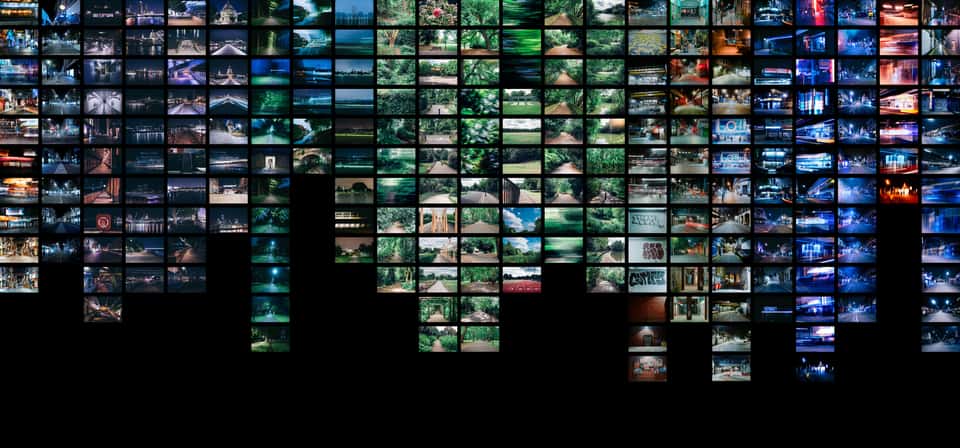
Sample of the photographic dataset captured along real running routes in London and Beijing, which served as the base for the generative system.


Key Contributions
- Conceived and implemented the hybrid generative system combining authored worlds with procedural variation
- Designed and built a custom Unity-built editor empowering artists to shape generative content without technical dependency
- Engineered a treadmill firmware integration for real-time control inside Unity
- Developed a scalable takeaway system linking real-time rendering, cloud upload, and QR delivery
- Led full system architecture and performance optimization for continuous in-store operation
- Supported on-site deployment in London and remote rollout for Beijing installations
Why this project matters
This project demonstrates how real-time systems, hardware integration, and generative design can be combined to create meaningful, scalable retail experiences. It shows how complex technical infrastructures can remain invisible to users while enabling deeply personalized, artistically authored outcomes—bridging brand identity, physical movement, and digital storytelling in a commercial environment.
